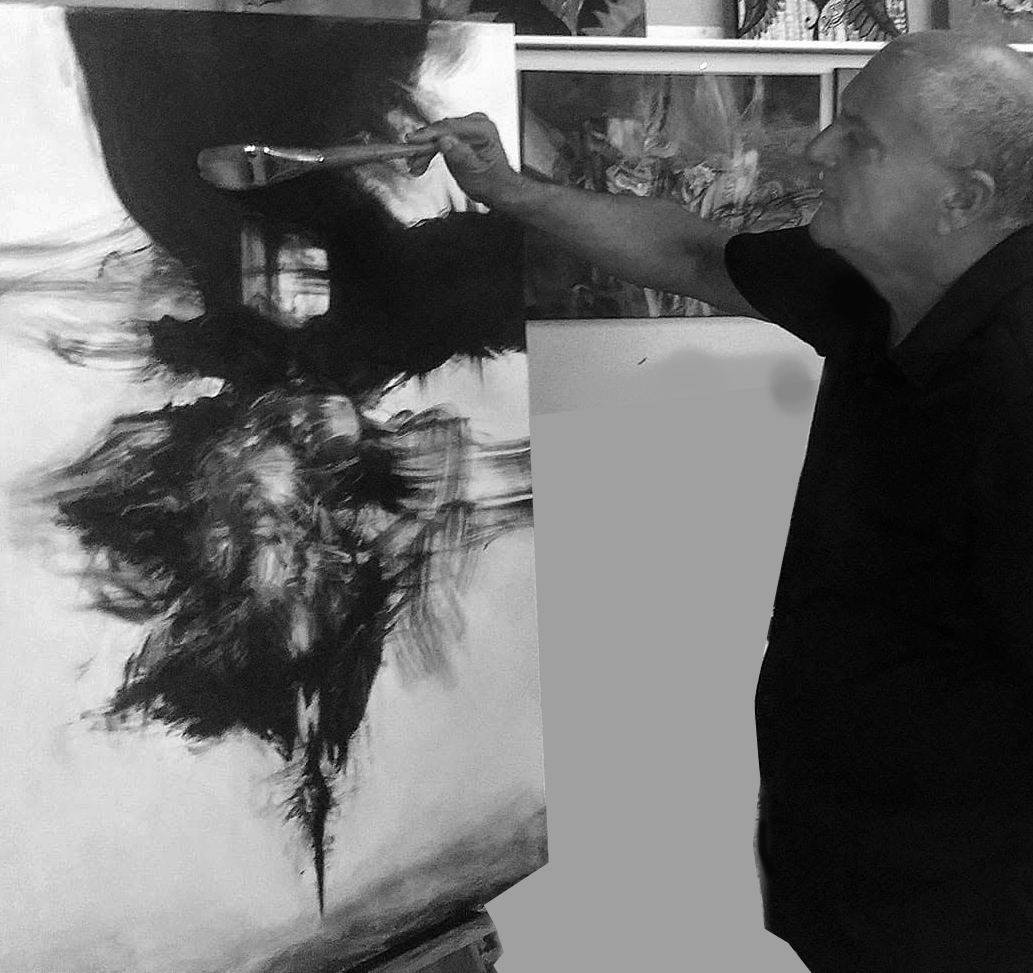
Manuel Góngora
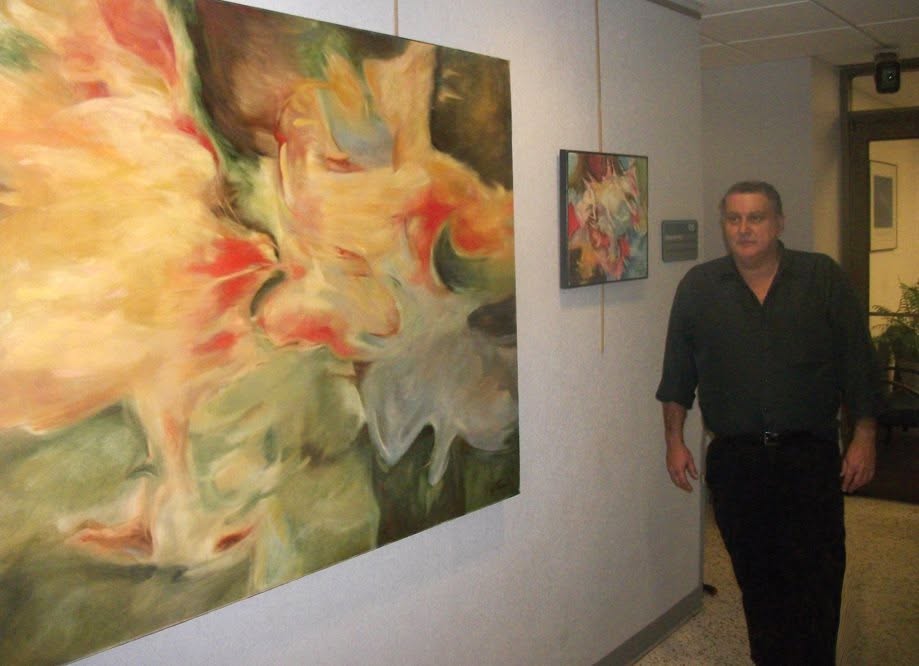
Manuel Góngora was born in Havana, Cuba, in 1957, and began painting at the age of nine. His artistic education has been essentially self-taught. From a very early age, he understood painting not simply as a technical skill, but as a way of investigating reality, matter, the human condition, and the inner world.
Throughout his career, he devoted countless years to the close study of the great masters of art history. His education developed through observing, analyzing, and understanding the construction, color, composition, and, above all, the creative freedom of artists such as Paul Cézanne, Paul Gauguin, Vincent van Gogh, Claude Monet, Edgar Degas, Salvador Dalí, Pablo Picasso, Joan Miró, Rufino Tamayo, Oswaldo Guayasamín, and Wifredo Lam. Among them, Roberto Matta became one of his greatest sources of inspiration because of his ability to transform pictorial space into a mental, organic universe in constant motion.
His great passion was abstract surrealism. As a young artist, he was deeply impressed by the surrealism of Salvador Dalí, and over time that search culminated in the abstract surrealism of Roberto Matta.
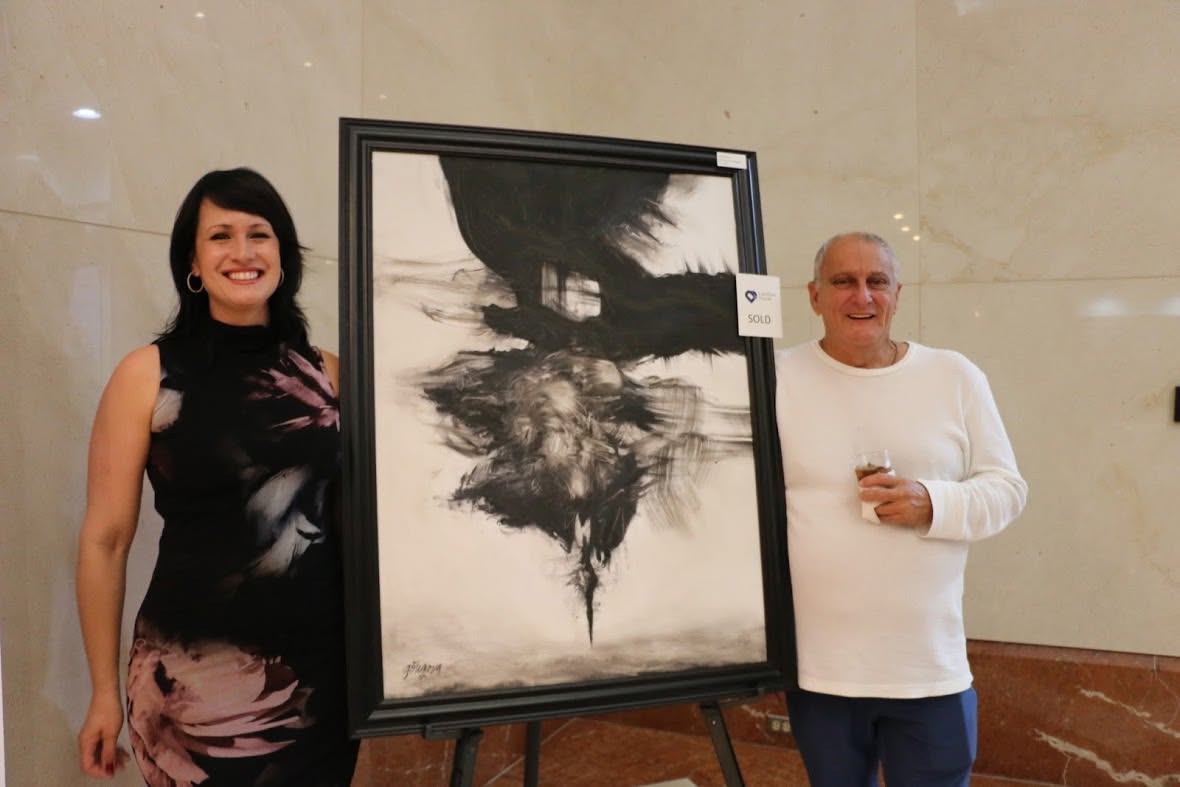
Góngora, however, never sought to imitate the language of those masters. His interest was in understanding how they had discovered their own voices so that, through that knowledge, he could construct his own. Over time, he developed a personal language characterized by gesture, line, matter, deformation, movement, and a constant tension between the organic, the human, and the technological.
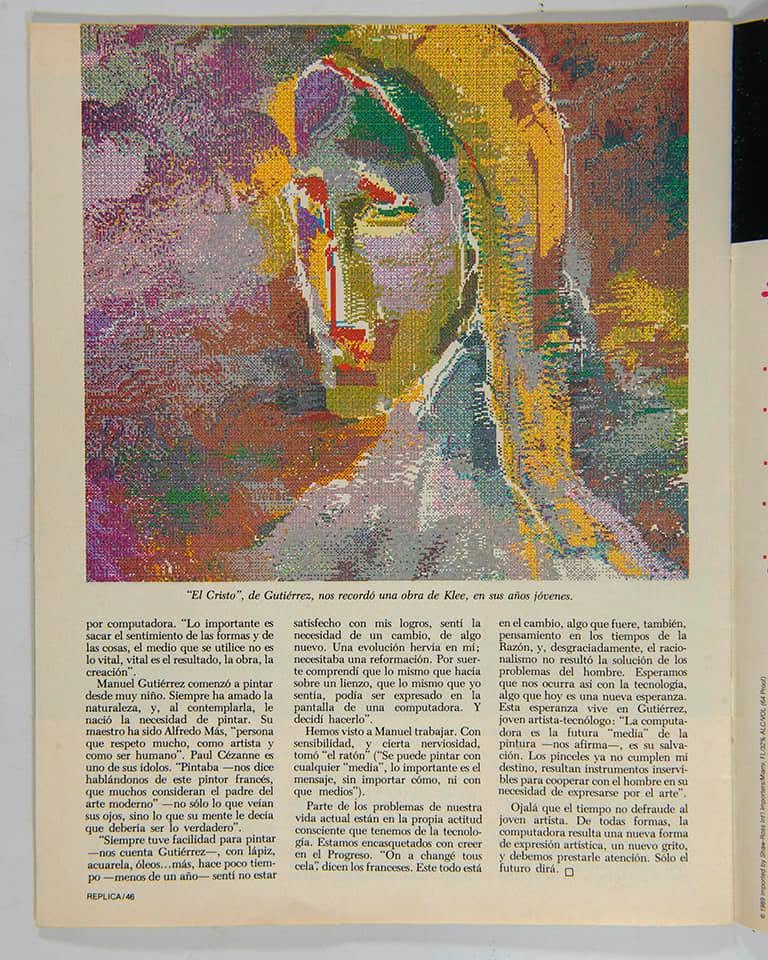
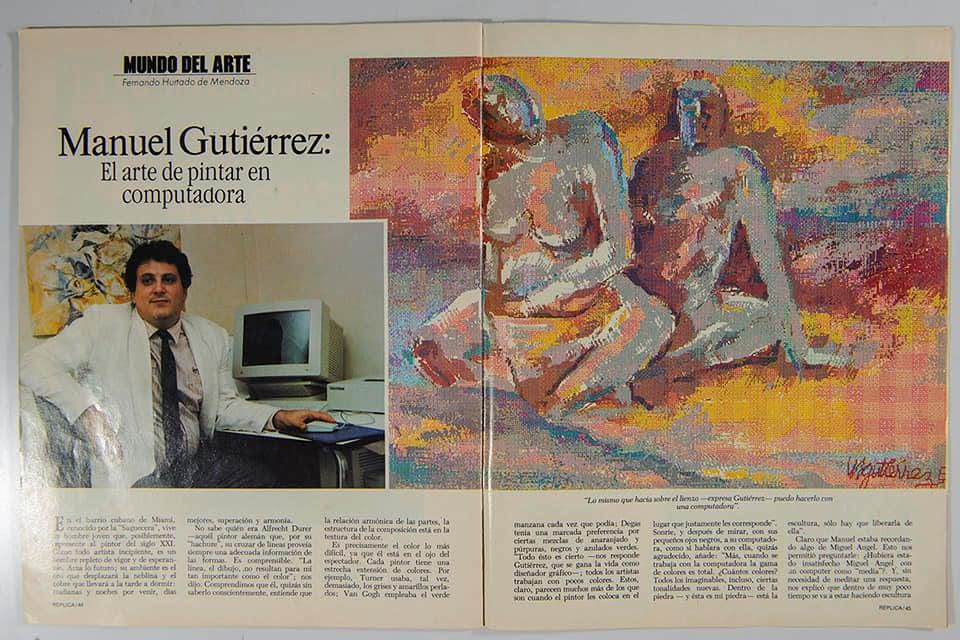
By the late 1980s, he had also begun exploring the possibilities of technology applied to art. Since 1989, he has worked with digital painting and digital imagery, at a time when computers were only beginning to emerge as tools for artistic creation. This investigation placed him early among a generation of artists who understood that technology could become not merely a tool, but a new pictorial medium.
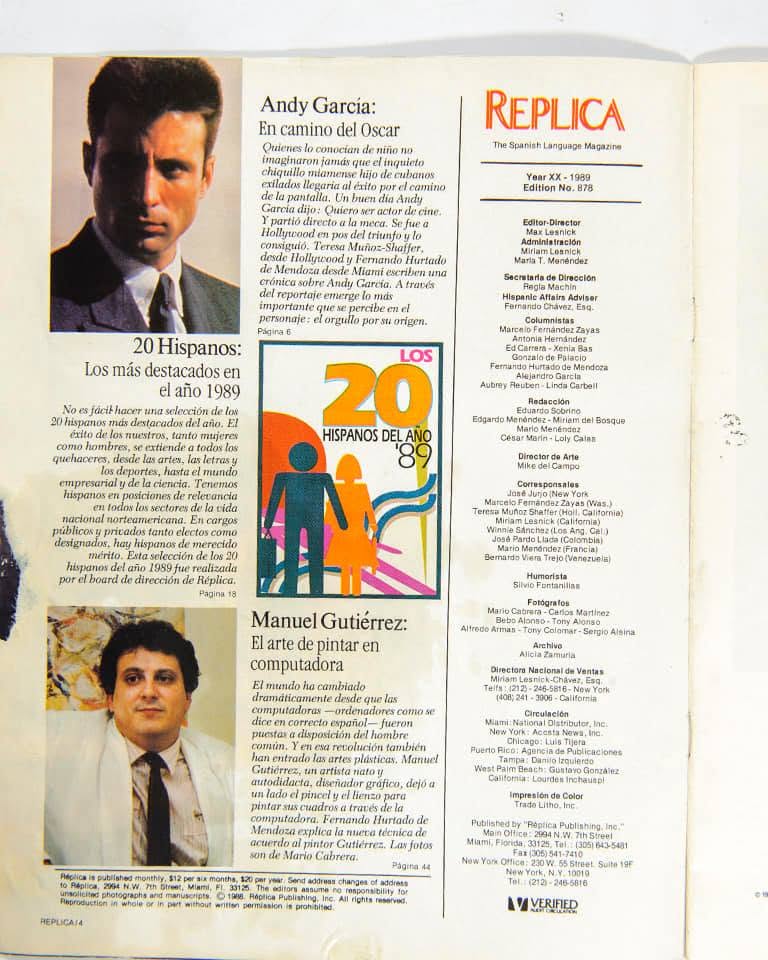
In 1989, he was interviewed by the magazine Réplica, and in 1991, interviews and features about his work appeared in Mundo XXI, published by Bloque de Armas, and in Hombre de Mundo. These publications formed part of a period of increasing exposure for his work within Miami’s Hispanic cultural environment.
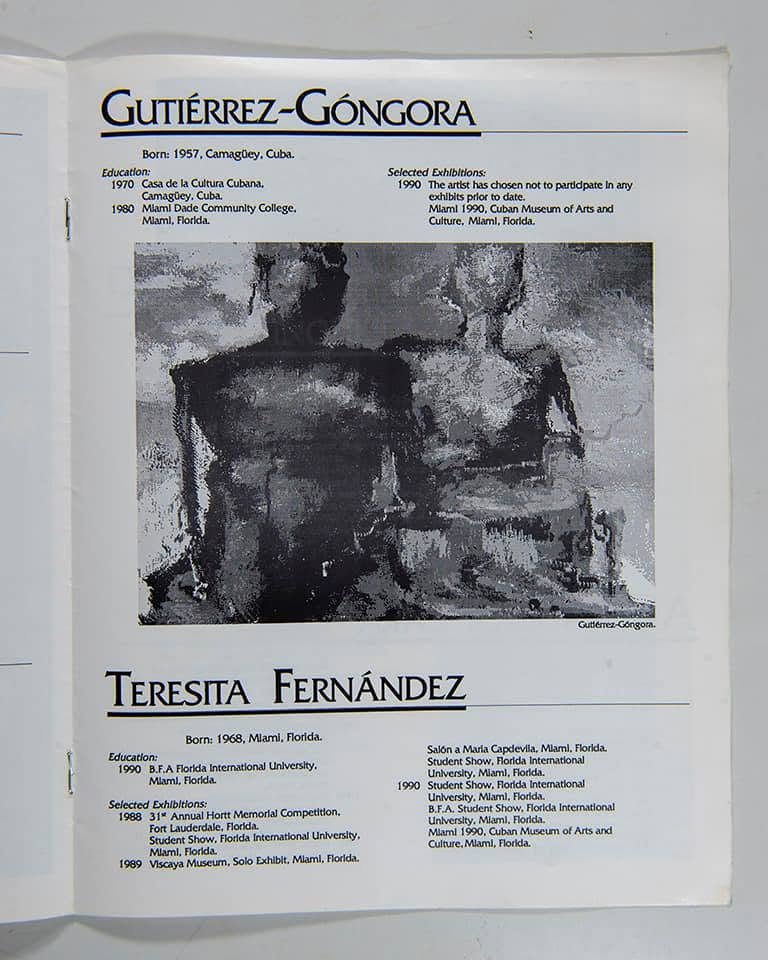
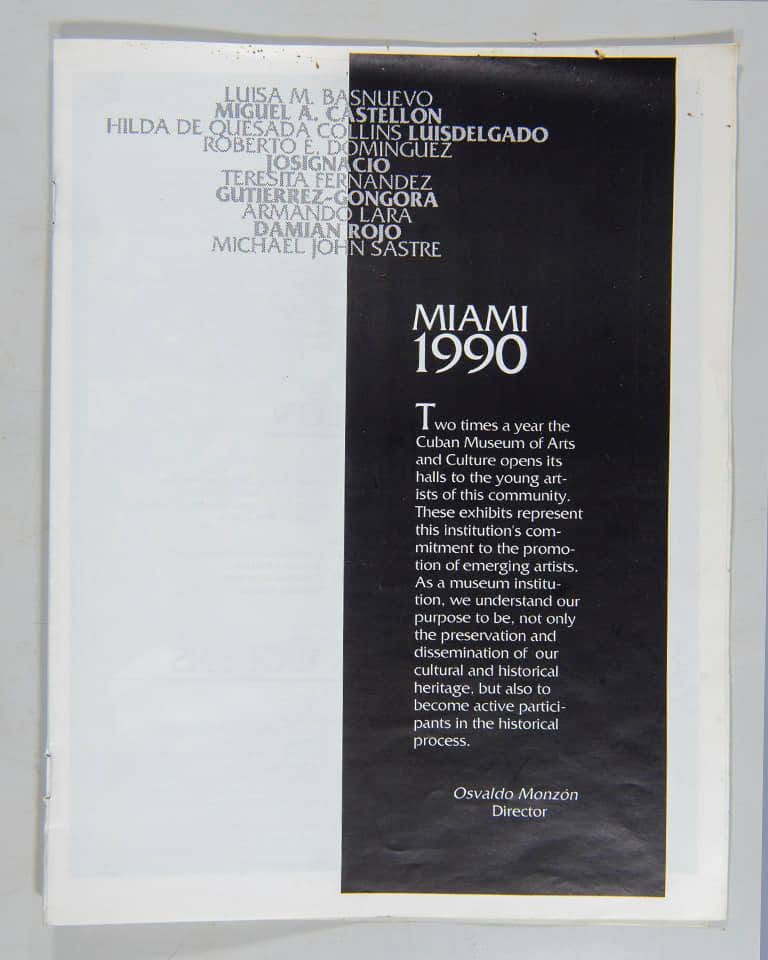
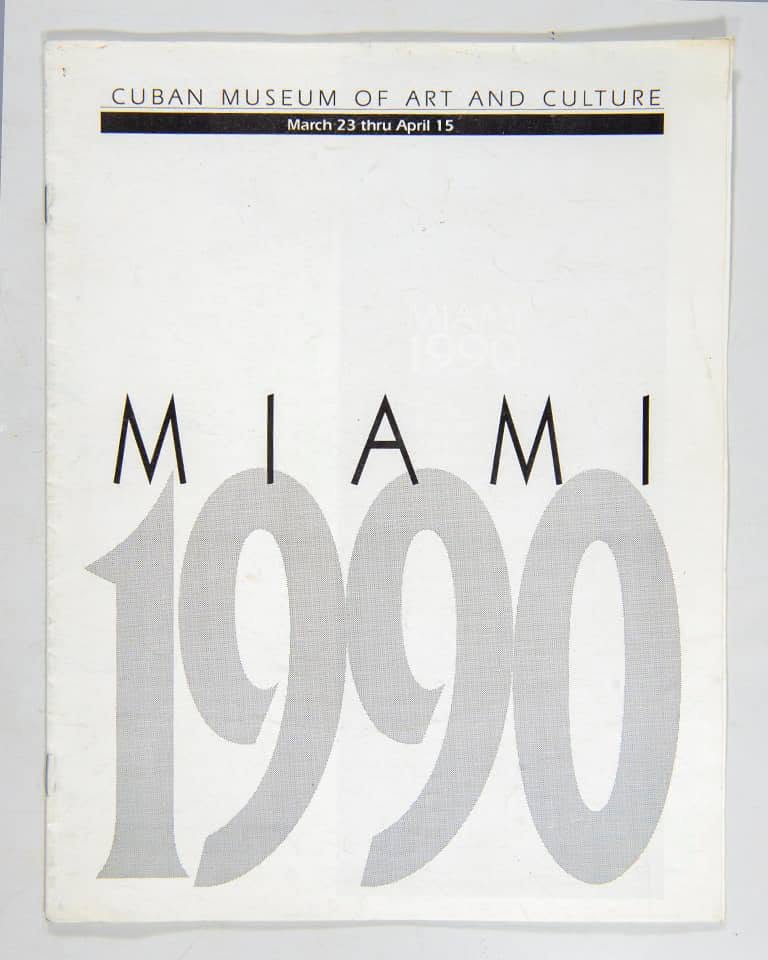
One of the fundamental moments in his career came in 1990, when he presented his work at the Cuban Museum in Miami. The exhibition included works created through digital media, consolidating an artistic investigation Góngora had begun the previous year and would continue developing for decades.
His work was also presented in exhibitions at Amerant Bank in Coral Gables, as well as in other exhibitions, cultural events, and artistic presentations. At the same time, Góngora participated in auctions and projects organized to raise funds for charitable causes, understanding from early on that art could also have a social and human dimension beyond the market and exhibition space.
For decades, he worked between traditional and digital media. Oil painting, drawing, line, digital tools, and later generative systems gradually became different extensions of the same way of thinking. For Góngora, technology never replaced the artist: it could become another instrument within the creative process, as long as it remained guided by artistic intention, thought, and sensitivity.
From this ongoing search emerged different periods and series, including Creative Equation, Simplicity, Caribbean, Who Cares?, Expression of the Line, and later Artificial Intelligence. Each represents a different moment in his artistic investigation, yet all preserve essential elements of his language: the movement of line, the tension of form, the presence of structures that seem to transform themselves, and a pictorial world that frequently exists between the recognizable and the unknown.
In 2018, Góngora began his Artificial Intelligence series, conceived as both a reflection and a warning about the increasingly profound relationship between human beings and technology. For the artist, artificial intelligence was not simply another technological tool. It represented a potentially radical transformation of civilization and raised a fundamental question about the future: would human beings control technology, or would technology eventually control human beings?
Within that series, an even more ambitious idea began to take shape.
Beginning in 2020, Góngora carried with him an artistic dream that for years seemed technically impossible: to create a work that could continue painting after him.
The idea was never simply to make a computer generate images. The goal was far more personal: to construct a living artwork capable of continuing to create according to his style, his pictorial decisions, his instructions, his way of constructing a composition, and his understanding of the act of painting itself.
That project ultimately became known as Infinito.
Over the years, Góngora defined its rules with extraordinary precision. The behavior of lines, masses, spaces, rhythms, distortions, the relationships between white, black, and gray, the appearance of forms, the gestures, and the decisions occurring throughout the creative process were gradually transformed into a living artistic system.
The purpose was not for the work to reproduce a finished painting by Manuel Góngora. The purpose was for it to continue painting.
In 2026, after years of experimentation and development, that dream was finally realized. Infinito became a living, continuous artwork capable of creating new compositions according to Manuel Góngora’s pictorial language, instructions, and artistic vision.
Each work appears, develops before the viewer, reaches its own conclusion, and then disappears so that another can begin. The process can continue indefinitely.
For Góngora, Infinito is the culminating work of his artistic career, because it brings together a question that has accompanied him throughout much of his life: can an artwork survive the artist?
His answer is this work.
Infinito was conceived so that his painting could continue creating even after he is gone.
It does not attempt to replace the artist, nor does it attempt to explain the mystery of creation. It is, precisely, an extension of that mystery: a work built from decades of experience, observation, painting, technology, and personal artistic decisions, capable of remaining in motion beyond the biological lifetime of the person who created it.
From the search begun by a child who started painting at the age of nine, through the masters he studied, traditional painting, the first digital experiments of 1989, exhibitions, publications, artistic series, and decades of experimentation, there ultimately emerged a work whose very name contains its intention:
INFINITO.
A work created to continue.